
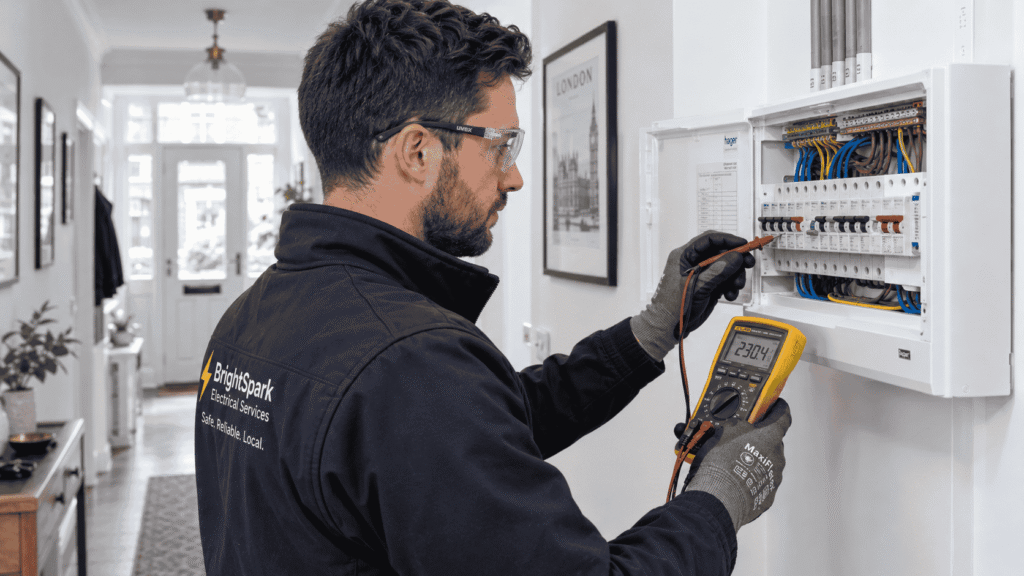
Flickering lights, a fuse box that trips for no clear reason, or a landlord inspection date creeping closer. Most property owners only think about their electrics when something goes wrong, and by then the problem is usually more expensive and more stressful than it needed to be. Part of the challenge is that Electrical Services covers a wide range of work, and it is not always obvious which job you need, who is qualified to do it, or what the law expects of you.
This guide breaks it all down in plain English. We explain what electrical services actually include, the most common jobs for homes and businesses, the safety checks and certificates that matter in the UK, and how to choose an electrician you can trust. By the end, you will know exactly what to book, when to book it, and what to expect.
What Are Electrical Services?
Electrical services is the umbrella term for any professional work on the wiring, circuits, fittings and equipment that power a property. That includes installing new circuits and fittings, repairing faults, testing and inspecting existing installations, upgrading old equipment, and carrying out planned maintenance.
In the UK, electrical work in homes is governed by Part P of the Building Regulations in England and Wales, and all installations are expected to meet the current wiring standard, BS 7671, often called the IET Wiring Regulations. In practice, this means certain jobs must be carried out by a qualified electrician who can certify the work, and some must also be notified to building control. Getting this right protects your safety, your insurance and the value of your property.
Common Electrical Services for Homes
Fault Finding and Repairs
Tripping circuits, dead sockets, buzzing switches and burning smells are all signs that something needs attention. A qualified electrician uses testing equipment to trace the fault to its source rather than simply resetting the breaker and hoping for the best. Repeated tripping is your system warning you, so it should never be ignored.
Consumer Unit Upgrades
The consumer unit, often called the fuse box, is the heart of your electrical system. Older units with rewireable fuses or no RCD protection fall short of modern safety standards. An upgrade adds residual current devices that cut the power in a fraction of a second if a fault is detected, greatly reducing the risk of electric shock and fire. This is notifiable work, so it must be done by a registered electrician.
Rewiring and Extensions
Properties with original wiring from several decades ago may have deteriorating insulation, too few sockets and no earthing on lighting circuits. A full or partial rewire brings everything up to date. If you are extending, converting a loft or renovating a kitchen, new circuits will also need to be designed, installed and certified.
Lighting, Sockets and EV Chargers
Smaller jobs such as adding sockets, fitting outdoor lighting or installing downlights are among the most requested services. Electric vehicle charge points are increasingly popular too, and these need a dedicated circuit, correct protection and a check that your supply can handle the extra load.
Electrical Services for Businesses and Landlords
Electrical Installation Condition Reports (EICR)
An EICR is a detailed inspection of the fixed wiring in a property. It identifies anything that is damaged, deteriorating or unsafe and grades each issue by urgency. For private landlords in England, an EICR is a legal requirement at least every five years, and a copy must be given to tenants. For commercial premises, five years is the commonly recommended interval, though some environments need more frequent checks.
Planned Maintenance and Facilities Management
For offices, shops, warehouses and managed residential blocks, a planned maintenance schedule keeps systems reliable and avoids disruptive breakdowns. This can include emergency lighting tests, fire alarm checks, thermal imaging of distribution boards and regular inspection of high use areas. Combining these under one facilities management arrangement saves time and keeps all your compliance records in one place.
PAT Testing
Portable appliance testing checks that kettles, computers, extension leads and other plug in equipment are safe to use. While the law does not set a fixed timetable, employers and landlords have a duty to keep equipment safe, and regular PAT testing is the simplest way to show you are meeting it.
How to Choose the Right Electrician
Not every electrician offers the same level of qualification, insurance or after care. Before you book, it pays to check a few essentials:
- Registration: Look for membership of a competent person scheme such as NICEIC or NAPIT, which allows notifiable work to be self certified.
- Certification: Ask whether you will receive an Electrical Installation Certificate or Minor Works Certificate once the job is finished.
- Insurance: Confirm the contractor holds public liability insurance.
- Written quote: A clear quote should explain the scope of work, materials and any exclusions.
- Reviews and references: Recent feedback from local customers tells you far more than a slick advert.
- Clear communication: A good electrician explains the problem in plain terms and never pressures you into extra work.
Signs Your Property Needs an Electrician Now
Some warning signs call for prompt action rather than a wait and see approach. These include scorch marks around sockets or switches, a hot or crackling consumer unit, lights that dim when appliances turn on, sockets that feel warm, frequent tripping and any tingling sensation when touching an appliance. If you notice any of these, switch off the affected circuit if it is safe to do so and arrange an inspection as soon as possible.
When to Get Expert Help
Simple tasks such as changing a light bulb or resetting a tripped switch are fine to handle yourself. Anything that involves opening up wiring, adding circuits, working in bathrooms or replacing the consumer unit should always go to a qualified professional. DIY electrical work that fails to meet regulations can invalidate your home insurance, create problems when selling your property and, most importantly, put lives at risk.
You should also speak to a professional first if you are buying an older property, planning a renovation, becoming a landlord, adding an EV charger or heat pump, or taking on responsibility for a commercial building. An early inspection gives you a clear picture of costs before you commit.
Frequently Asked Questions
How often should I have my electrics inspected?
For owner occupied homes, an inspection every ten years is generally recommended, or whenever the property changes hands. Rented homes in England need an EICR at least every five years, and commercial premises are usually inspected every five years or sooner depending on use.
How much do electrical services cost?
Costs vary with the size of the job, the property and access. Small repairs may only take an hour, while a full rewire is a significant project. The best approach is to request a written quote after the electrician has assessed the work in person.
Can I do my own electrical work?
You can carry out very minor tasks, but most work on circuits must meet Part P and BS 7671. Notifiable work, such as new circuits or consumer unit replacements, must be certified, which in practice means using a registered electrician.
What happens if my EICR comes back unsatisfactory?
The report will list issues by code. Anything coded C1 or C2 must be fixed, and landlords must complete the remedial work within 28 days or sooner if the report says so. Once repaired, you will receive written confirmation that the work is done.
Do you need to be home while the work is carried out?
Not always. For many jobs, especially in rented or commercial properties, access can be arranged in advance. You will usually need to be available at the start to discuss the work and at the end to receive your certificate.
Final Thoughts
Reliable electrical services are about much more than fixing faults when they appear. Regular inspections, timely upgrades and certified work keep your home or business safe, keep you on the right side of the law and help you avoid costly surprises. Whether you need a quick repair, a consumer unit upgrade, an EICR or an ongoing maintenance plan, choosing a qualified and registered electrician is the single most important decision you can make.
If you own or manage a property in London or Essex, NexVolt FM is ready to help. Get in touch today to book an inspection or request a free quote, and give your electrics the attention they deserve.